Discover The Secrets Of Unit 3 Session 4 LETRS
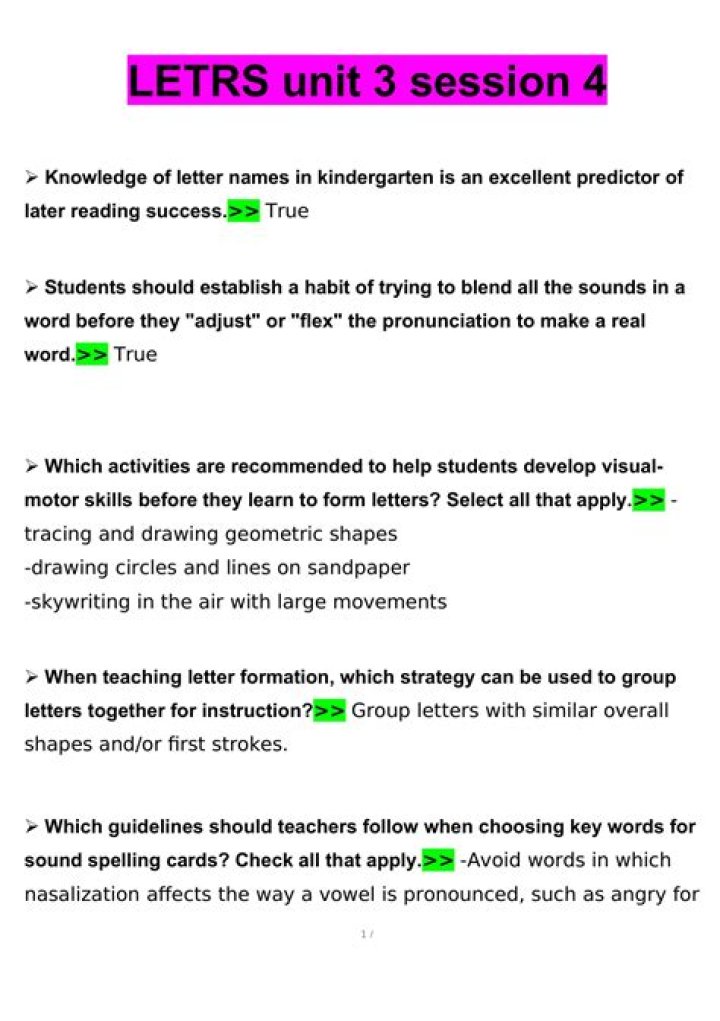
Unit 3 Session 4 LETRS is a professional development program for educators that focuses on improving literacy instruction. LETRS is an acronym that stands for Language Essentials for Teachers of Reading and Spelling. The program is based on the science of reading and provides educators with the knowledge and skills they need to effectively teach reading and spelling to all students, including those with dyslexia and other reading difficulties.
LETRS is a comprehensive program that covers a wide range of topics, including phonemic awareness, phonics, fluency, vocabulary, and comprehension. The program is delivered through a combination of online and in-person instruction. Educators who complete the LETRS program are eligible for continuing education credits.
LETRS has been shown to be effective in improving student literacy outcomes. A study by the University of Texas at Austin found that students whose teachers participated in LETRS made significant gains in reading and spelling. The study also found that LETRS was particularly effective for students with dyslexia.
Unit 3 Session 4 LETRS
Unit 3 Session 4 LETRS is a professional development program for educators that focuses on improving literacy instruction. LETRS is an acronym that stands for Language Essentials for Teachers of Reading and Spelling. The program is based on the science of reading and provides educators with the knowledge and skills they need to effectively teach reading and spelling to all students, including those with dyslexia and other reading difficulties.
- Comprehensive: LETRS covers a wide range of topics, including phonemic awareness, phonics, fluency, vocabulary, and comprehension.
- Evidence-based: LETRS is based on the latest research on the science of reading.
- Effective: Studies have shown that LETRS is effective in improving student literacy outcomes.
- Professional development: LETRS is a professional development program that provides educators with continuing education credits.
- Nationally recognized: LETRS is a nationally recognized program that is used by schools and districts across the country.
- Supported by research: LETRS is supported by a strong body of research that demonstrates its effectiveness in improving student literacy outcomes.
- Aligned with standards: LETRS is aligned with state and national standards for reading and spelling instruction.
- Engaging and interactive: LETRS is an engaging and interactive program that provides educators with opportunities to learn and practice new teaching strategies.
- Collaborative: LETRS is a collaborative program that encourages educators to work together to improve literacy instruction.
LETRS is an essential professional development program for educators who want to improve their literacy instruction. The program is comprehensive, evidence-based, effective, and aligned with state and national standards. LETRS is also engaging and interactive, and it provides educators with opportunities to learn and practice new teaching strategies.
Comprehensive
The comprehensiveness of LETRS is one of its key strengths. By covering a wide range of topics, LETRS provides educators with the knowledge and skills they need to effectively teach reading and spelling to all students, including those with dyslexia and other reading difficulties.
- Phonemic awareness: Phonemic awareness is the ability to hear and manipulate the individual sounds in words. It is a foundational skill for learning to read and spell.
- Phonics: Phonics is the relationship between letters and sounds. It is essential for learning to decode words.
- Fluency: Fluency is the ability to read quickly and accurately. It is important for comprehension.
- Vocabulary: Vocabulary is the knowledge of words and their meanings. It is essential for comprehension.
- Comprehension: Comprehension is the ability to understand what you read. It is the ultimate goal of reading instruction.
By covering all of these essential topics, LETRS provides educators with the comprehensive knowledge and skills they need to effectively teach reading and spelling to all students.
Evidence-based
The science of reading is a body of research that investigates how people learn to read and spell. This research has shown that there are five essential components of reading instruction: phonemic awareness, phonics, fluency, vocabulary, and comprehension. LETRS is based on the latest research on the science of reading and provides educators with the knowledge and skills they need to effectively teach these essential components.
For example, LETRS teaches educators how to use phonemic awareness activities to help students learn the sounds of letters and how to blend those sounds together to read words. LETRS also teaches educators how to use phonics instruction to help students learn the relationship between letters and sounds. This knowledge is essential for students to be able to decode words and spell correctly.
The evidence-based approach of LETRS is one of the key reasons for its effectiveness. By using research-based teaching methods, LETRS helps educators to improve student literacy outcomes.
Effective
LETRS is an effective professional development program for educators that improves student literacy outcomes. Studies have shown that students whose teachers participate in LETRS make significant gains in reading and spelling. LETRS is particularly effective for students with dyslexia and other reading difficulties.
- Improved Reading Comprehension
LETRS helps educators to teach students the skills they need to comprehend text. These skills include phonemic awareness, phonics, fluency, vocabulary, and comprehension. By teaching these skills, LETRS helps students to understand what they read and to become more proficient readers. - Improved Spelling
LETRS also helps educators to teach students the skills they need to spell correctly. These skills include phonemic awareness, phonics, and vocabulary. By teaching these skills, LETRS helps students to learn the relationship between letters and sounds and to spell words correctly. - Reduced Reading Difficulties
LETRS is particularly effective for students with reading difficulties, such as dyslexia. LETRS provides educators with the knowledge and skills they need to help students with reading difficulties to overcome their challenges and to become successful readers.
Overall, LETRS is an effective professional development program for educators that improves student literacy outcomes. LETRS is based on the science of reading and provides educators with the knowledge and skills they need to effectively teach reading and spelling to all students, including those with reading difficulties.
Professional development
Unit 3 Session 4 LETRS is a professional development program for educators that focuses on improving literacy instruction. LETRS is an acronym that stands for Language Essentials for Teachers of Reading and Spelling. The program is based on the science of reading and provides educators with the knowledge and skills they need to effectively teach reading and spelling to all students, including those with dyslexia and other reading difficulties.
As a professional development program, LETRS provides educators with continuing education credits. These credits can be used to renew teaching licenses or to meet other professional development requirements. Earning continuing education credits demonstrates a commitment to professional growth and development. It also shows that educators are up-to-date on the latest research and best practices in education.
The professional development component of LETRS is an important part of the program. It provides educators with the opportunity to learn from experts in the field of literacy instruction. Educators can also network with other educators and share ideas. The professional development component of LETRS helps educators to improve their teaching skills and to become more effective teachers.
In conclusion, the professional development component of LETRS is an important part of the program. It provides educators with the opportunity to learn from experts, network with other educators, and improve their teaching skills. Earning continuing education credits through LETRS demonstrates a commitment to professional growth and development.
Nationally recognized
Unit 3 Session 4 LETRS is a nationally recognized professional development program for educators that focuses on improving literacy instruction. LETRS is an acronym that stands for Language Essentials for Teachers of Reading and Spelling. The program is based on the science of reading and provides educators with the knowledge and skills they need to effectively teach reading and spelling to all students, including those with dyslexia and other reading difficulties.
- Rigorous Content and Evidence-Based Practices:
LETRS is a comprehensive and rigorous program that is aligned with national standards for reading and spelling instruction. The program is based on the latest research on the science of reading and provides educators with evidence-based teaching strategies. - Expert Faculty and Training:
LETRS is taught by a team of expert faculty who are leaders in the field of literacy instruction. The faculty provides educators with high-quality training and support. - Professional Learning Community:
LETRS creates a professional learning community for educators. Educators who participate in LETRS have the opportunity to network with other educators and share ideas. - Proven Results:
LETRS has been shown to be effective in improving student literacy outcomes. Studies have shown that students whose teachers participate in LETRS make significant gains in reading and spelling.
The national recognition of LETRS is a testament to the quality of the program. LETRS is a valuable professional development opportunity for educators who want to improve their literacy instruction and help their students succeed.
Supported by research
Unit 3 Session 4 LETRS is a professional development program for educators that focuses on improving literacy instruction. LETRS is based on the science of reading and provides educators with the knowledge and skills they need to effectively teach reading and spelling to all students, including those with dyslexia and other reading difficulties.
The research that supports LETRS is extensive and rigorous. Studies have shown that LETRS is effective in improving student literacy outcomes, including reading comprehension, fluency, and spelling. For example, a study by the University of Texas at Austin found that students whose teachers participated in LETRS made significant gains in reading and spelling. The study also found that LETRS was particularly effective for students with dyslexia.
The research that supports LETRS is important because it provides evidence that the program is effective in improving student literacy outcomes. This evidence is essential for educators and administrators who are making decisions about how to best use their resources to improve student learning. The research also provides support for the use of LETRS as a professional development program for educators.
In conclusion, the research that supports LETRS is a valuable resource for educators, administrators, and policymakers. The research provides evidence that LETRS is an effective professional development program that can improve student literacy outcomes.
Aligned with standards
Unit 3 Session 4 LETRS is a professional development program for educators that focuses on improving literacy instruction. LETRS is an acronym that stands for Language Essentials for Teachers of Reading and Spelling. The program is based on the science of reading and provides educators with the knowledge and skills they need to effectively teach reading and spelling to all students, including those with dyslexia and other reading difficulties.
LETRS is aligned with state and national standards for reading and spelling instruction. This means that the program teaches educators how to teach reading and spelling in a way that is consistent with the expectations of state and national standards.
- Common Core State Standards (CCSS): The CCSS are a set of academic standards that define what students should know and be able to do in English language arts and mathematics. LETRS is aligned with the CCSS for English language arts. This means that the program teaches educators how to teach reading and spelling in a way that is consistent with the expectations of the CCSS.
- National Council of Teachers of English (NCTE) Standards: The NCTE is a professional organization for teachers of English language arts. The NCTE has developed a set of standards for the teaching of English language arts. LETRS is aligned with the NCTE standards. This means that the program teaches educators how to teach reading and spelling in a way that is consistent with the expectations of the NCTE.
The alignment of LETRS with state and national standards is important because it ensures that the program is teaching educators how to teach reading and spelling in a way that is consistent with the expectations of schools and districts. This alignment also helps to ensure that students are receiving a high-quality education that is preparing them for success in college and careers.
Engaging and interactive
The engaging and interactive nature of LETRS is one of its key strengths. By providing educators with opportunities to learn and practice new teaching strategies, LETRS helps to ensure that educators are able to effectively implement the program in their classrooms.
- Active Learning: LETRS uses a variety of active learning strategies to engage educators and help them to learn new teaching strategies. These strategies include hands-on activities, simulations, and role-playing. Active learning is an effective way to learn new skills and knowledge because it requires educators to actively participate in the learning process.
- Collaboration: LETRS encourages collaboration among educators. Educators work together in small groups to complete activities and assignments. This collaboration allows educators to share ideas and learn from each other. Collaboration is an important part of professional development because it helps educators to build a network of support and to learn from the experiences of others.
- Feedback: LETRS provides educators with regular feedback on their progress. This feedback helps educators to identify areas where they need to improve and to make necessary adjustments to their teaching. Feedback is an essential part of professional development because it helps educators to track their progress and to make sure that they are meeting the goals of the program.
- Practice: LETRS provides educators with opportunities to practice new teaching strategies in a safe and supportive environment. This practice helps educators to build confidence in their ability to implement new teaching strategies in their classrooms. Practice is an important part of professional development because it helps educators to refine their skills and to become more effective teachers.
The engaging and interactive nature of LETRS is an important factor in its success. By providing educators with opportunities to learn and practice new teaching strategies, LETRS helps to ensure that educators are able to effectively implement the program in their classrooms and improve student learning.
Collaborative
Collaboration is an essential component of Unit 3 Session 4 LETRS. Through collaboration, educators can share ideas, learn from each other, and develop new strategies for teaching literacy. This collaborative approach is essential for improving literacy instruction and student learning.
There are many ways that educators can collaborate in LETRS. They can work together to plan lessons, develop assessments, and share resources. They can also observe each other's teaching and provide feedback. Collaboration allows educators to learn from each other's strengths and to improve their own teaching practices.
One example of how collaboration can improve literacy instruction is through the use of peer coaching. In peer coaching, educators work together to identify areas where they need to improve their teaching. They then observe each other's teaching and provide feedback. This feedback can help educators to identify areas where they need to improve and to develop new strategies for teaching.
Collaboration is an essential component of Unit 3 Session 4 LETRS. Through collaboration, educators can improve their literacy instruction and help their students to succeed.
FAQs on Unit 3 Session 4 LETRS
This section provides answers to frequently asked questions (FAQs) about Unit 3 Session 4 LETRS, a professional development program for educators that focuses on improving literacy instruction. LETRS stands for Language Essentials for Teachers of Reading and Spelling.
Question 1: What is Unit 3 Session 4 LETRS?Unit 3 Session 4 LETRS is a professional development program that provides educators with the knowledge and skills they need to effectively teach reading and spelling to all students, including those with dyslexia and other reading difficulties. The program is based on the science of reading and provides educators with evidence-based teaching strategies.Question 2: What are the benefits of Unit 3 Session 4 LETRS?
Unit 3 Session 4 LETRS has been shown to improve student literacy outcomes, including reading comprehension, fluency, and spelling. The program is also effective for students with dyslexia and other reading difficulties.Question 3: Who can participate in Unit 3 Session 4 LETRS?
Unit 3 Session 4 LETRS is designed for educators who teach reading and spelling to students in grades K-12. The program is appropriate for both general education and special education teachers.Question 4: How long does Unit 3 Session 4 LETRS take to complete?
Unit 3 Session 4 LETRS is a year-long program that consists of 10 full-day sessions. The sessions are typically held once a month.Question 5: How much does Unit 3 Session 4 LETRS cost?
The cost of Unit 3 Session 4 LETRS varies depending on the location and provider. Please contact your local educational agency for more information.Question 6: How can I register for Unit 3 Session 4 LETRS?
To register for Unit 3 Session 4 LETRS, please contact your local educational agency.
By participating in Unit 3 Session 4 LETRS, educators can gain the knowledge and skills they need to improve their literacy instruction and help their students succeed.
If you have any further questions about Unit 3 Session 4 LETRS, please do not hesitate to contact your local educational agency or visit the LETRS website.
Tips from Unit 3 Session 4 LETRS
Unit 3 Session 4 LETRS provides educators with a wealth of knowledge and strategies to improve literacy instruction. Here are a few key tips to help you get started:
Tip 1: Focus on Phonemic Awareness
Phonemic awareness is the ability to hear and manipulate the individual sounds in words. It is a foundational skill for learning to read and spell. Educators can help students develop phonemic awareness through activities such as rhyming games, sound substitution, and blending sounds together to form words.
Tip 2: Use Explicit Phonics Instruction
Phonics is the relationship between letters and sounds. Explicit phonics instruction teaches students the relationship between letters and sounds in a systematic and sequential way. This helps students to decode words and spell correctly.
Tip 3: Provide Opportunities for Fluency Practice
Fluency is the ability to read quickly and accurately. Students need opportunities to practice reading aloud in order to develop fluency. Educators can provide opportunities for fluency practice through activities such as repeated reading, choral reading, and reader's theater.
Tip 4: Build Vocabulary
Vocabulary is the knowledge of words and their meanings. Students need a strong vocabulary in order to comprehend what they read. Educators can help students build vocabulary through activities such as word walls, vocabulary games, and reading widely.
Tip 5: Use Comprehension Strategies
Comprehension is the ability to understand what you read. Educators can help students develop comprehension strategies through activities such as asking questions, making predictions, and summarizing.
Summary of Key Takeaways
By following these tips, educators can help their students to develop the skills they need to become successful readers and writers.
Transition to the Article's Conclusion
Unit 3 Session 4 LETRS provides educators with a wealth of knowledge and strategies to improve literacy instruction. By implementing these tips, educators can help their students to achieve their full potential.
Conclusion
Unit 3 Session 4 LETRS provides educators with the knowledge, skills, and strategies they need to improve literacy instruction for all students, including those with dyslexia and other reading difficulties. The program is based on the science of reading and has been shown to be effective in improving student literacy outcomes.
LET's key components include phonemic awareness, phonics, fluency, vocabulary, and comprehension. By focusing on these essential components, educators can help their students to develop the skills they need to become successful readers and writers.
If you are an educator who is interested in improving your literacy instruction, I encourage you to learn more about Unit 3 Session 4 LETRS. The program can help you to make a real difference in the lives of your students.
Discover The Art Of Lemon Bisque: Secrets From Cook's Country
Discover The Delightful World Of "I Heart Cereal Blue Bell Ice Cream"
Unveil The Secrets: Discover The Best Rodecaster Pro Alternatives
Phonics Instruction, Reading Instruction, Cvcc Words, Writing
LETRS Unit 1 Session 8 Verified 2022/23 in 2022 The unit, Word